
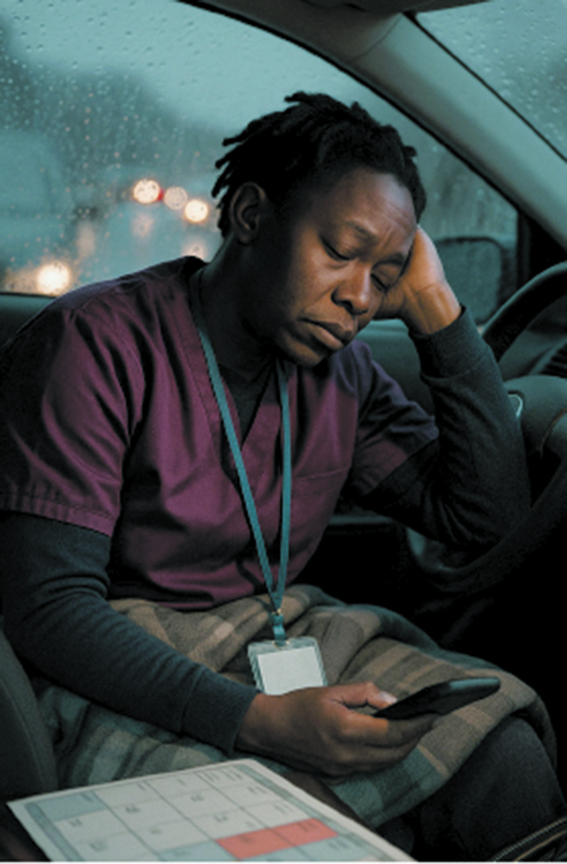
Every day, I drive an hour just to get to work. You might ask, what about fuel? It’s not paid for.From 7 a.m. until 10 p.m., I’m away from home. My so-called “breaks” are spent sitting in a cold car between calls, trying to stay warm.
Some days, I get paid for just six hours.
If I’m lucky, maybe eight. But I’m still out for fifteen. In domiciliary care, anything can happen—one day you lose clients, the next day you gain more. There’s no consistency, no stability. In reality, it feels just like being on a zero-hours contract.
This instability also affects the people we care for. It’s no surprise that so many safeguarding concerns are raised with the Care Quality Commission (CQC). Carers are often given just 15 minutes per visit—to administer medication, prepare meals, do housekeeping, and provide personal care. It’s impossible.
When you are rushed, you miss things. Sometimes important things. But we stay longer—out of kindness, out of care, out of duty.Even though we know we won’t be paid for that extra time.
Morning calls are the hardest. We’re expected to help clients shower, dress, and eat breakfast in just 30 minutes. Some clients struggle just to get out of bed due to mobility
issues. It can take 15 minutes just to reach the bathroom. None of this is taken into account.
And if something goes wrong? It’s the carer who gets blamed. Never the system. I once asked my company: How do you even carry out these assessments? Some clients clearly need more time than others.
People have different conditions. But the visit times we’re given don’t reflect the real needs of the client. It makes you wonder if the assessments are being done properly—or even fairly.
There are also clients who regularly chase carers away. Agencies know who these clients are. And yet, they still receive full payment from the council for each call—even when no care is delivered. So where is that money going?
This job is not just underpaid and undervalued. It’s being exploited from both ends. And at the centre of it all is the migrant carer, doing their best — day in and day out —with too little time, too few resources, and almost no recognition.
 PAN AFRICAN WORKERS ASSOCIATION (PAWA)